What Is Softwood Timber? A Homeowner’s Guide
July 9, 2026 | News | Written by Nicola Harrison
Thinking about wooden windows for your home? You have probably come across the terms softwood and hardwood. Knowing the difference helps you make a confident choice.
This guide explains what softwood timber is, the common species used, and why high-quality engineered softwood is a reliable choice for modern timber windows.
At a glance:
- Softwood comes from coniferous, evergreen trees known as gymnosperm trees.
- Popular softwood species include scots pine, spruce, cedar, larch, fir and douglas fir.
- Softwood is fast-growing, sustainable and easy to work with.
- At Bereco, we use engineered softwood European Redwood (Scots Pine) for durable, long-lasting windows and doors.
What is softwood timber?
Softwood timber comes from coniferous trees. These are evergreen conifers that usually keep their needles all year and produce cones.
The name does not refer to how soft or hard the wood is. It simply describes the type of tree it comes from. Some softwood species are very durable indeed.
Softwood trees grow faster than hardwood trees. This fast growth rate makes them a sustainable and popular choice in the construction industry.
You will find softwood used in many products across the UK, Europe, China and other parts of the world, including:
- structural framing
- timber cladding
- decking
- fencing
- flooring
- plywood and MDF
- paper production and card products
Softwood vs hardwood
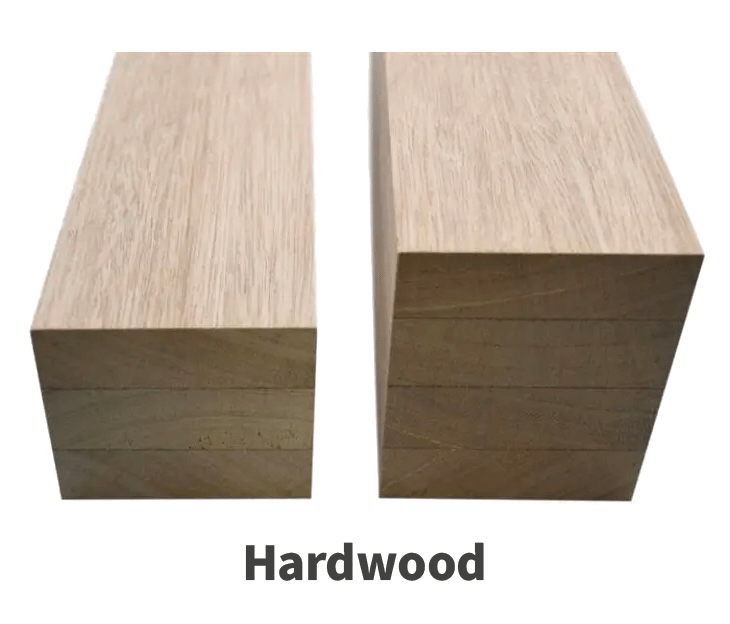
The main difference comes down to the trees themselves.
- Softwood comes from gymnosperm trees, which are conifers.
- Hardwood comes from angiosperms, which are broadleaf, deciduous trees.
Hardwood trees such as oak, beech, maple, walnut, mahogany, alder and hickory tend to grow slowly. They often have visible pores and dense grain. The hardest hardwoods are very durable but cost more.
Here is how the two compare:
- Softwood comes from evergreen conifers, while hardwood comes from broadleaf, deciduous trees.
- Growth. Softwood grows quickly, whereas hardwood grows slowly.
- Cost. Softwood is more affordable, while hardwood tends to be more expensive.
- Workability. Softwood is easier to work with, while hardwood is harder.
- Grain. Softwood often has a straight grain, while hardwood shows more unique grain patterns.
Softwood vs Redwood: what is the difference?
You may have seen the terms softwood and redwood used interchangeably. They are not the same thing, and it is worth understanding the distinction.
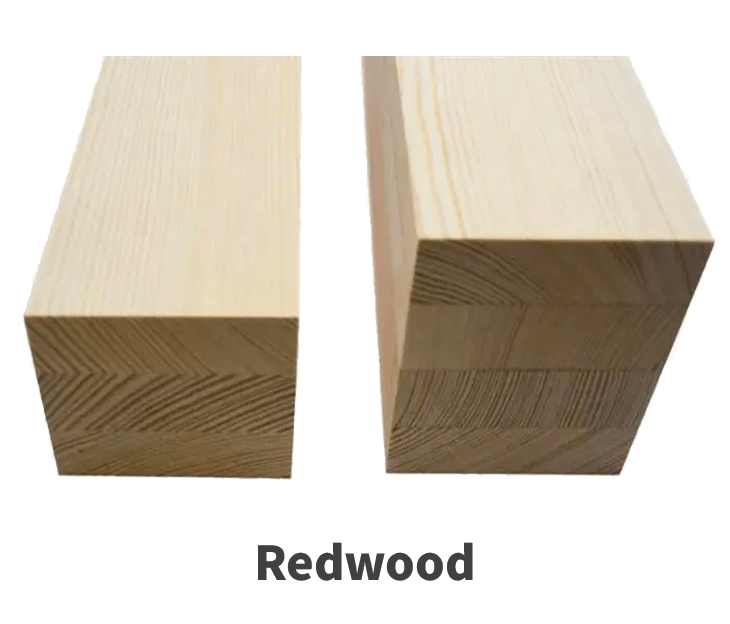
Softwood is a broad category that covers all timber from coniferous trees. Redwood is a specific species within that category.
European Redwood is the common name for Scots Pine (Pinus Sylvestris). It gets its name from the warm, reddish tone of its heartwood. It is one of the most widely used softwoods in the UK and across Europe, and it is the species we use at Bereco.
So while all redwood is softwood, not all softwood is redwood. When someone refers to redwood in the context of windows and joinery, they are almost always referring to European Redwood, or Scots Pine, rather than softwood as a whole.
Slow grown vs fast grown softwood: why it matters
Not all softwood is equal. While softwood trees grow faster than hardwood as a general rule, growth speed still varies significantly between species and growing regions, and this makes a real difference to timber quality.
At Bereco, we specifically use slow grown European Redwood. Our Scots Pine is sourced from northern Europe, where the harsh climate and long winters mean the trees grow far more slowly than standard pine grown in milder conditions.
This slower growth produces timber that is:
- Denser – with tighter annual growth rings
- More stable – less prone to movement and warping
- Tighter grained – giving a smoother, more consistent finish
The result is a premium softwood that performs significantly better than standard pine. It sits in a different class from fast grown alternatives, combining the affordability and workability of softwood with a density and durability that rivals many hardwoods.
So when you choose a Bereco window, you are not just getting softwood. You are getting one of the finest softwood timbers available.
Popular softwood species
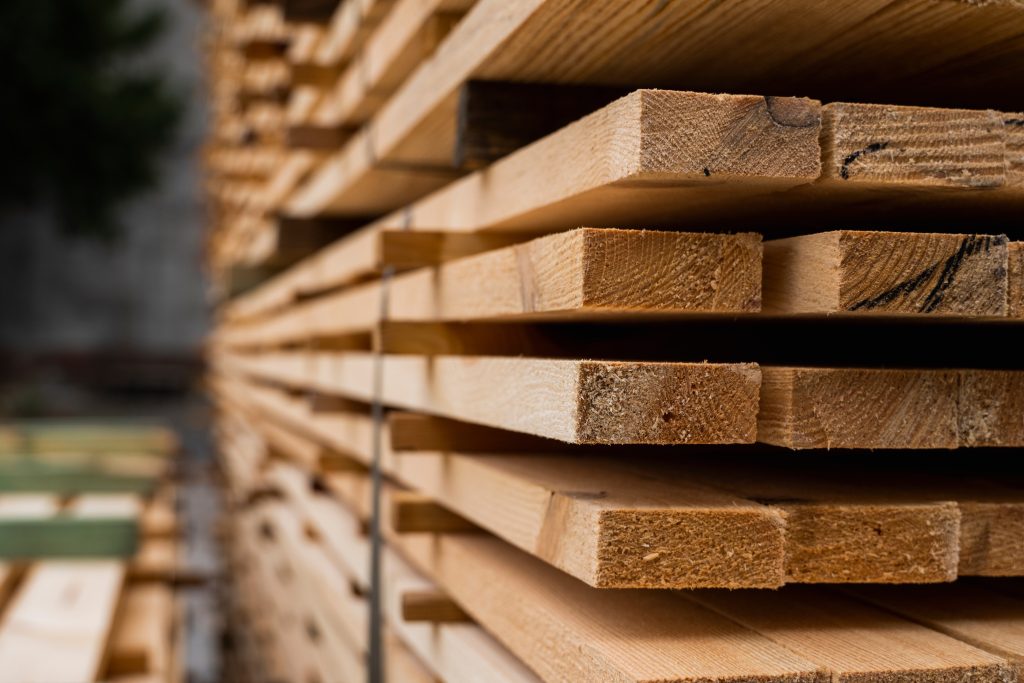
Each type of softwood has its own unique characteristics. Here are some popular softwood species.
Scots pine (European Redwood)
Also known as Pinus Sylvestris, scots pine is prized for its straight grain, smooth texture and excellent workability. It is our timber of choice at Bereco.
Spruce
A light, strong softwood lumber used widely in construction and woodworking.
Cedar
Western red cedar, or red cedar, is known for its natural resistance to decay. It is a favourite for cladding and outdoor projects.
Larch
Siberian larch is dense and durable, making it ideal for cladding and decking.
Douglas fir
A strong fir species with an attractive grain, often used in structural framing.
Juniper
A slow-growing softwood with aromatic timber, used for smaller woodworking projects.
Why softwood is a popular choice for windows
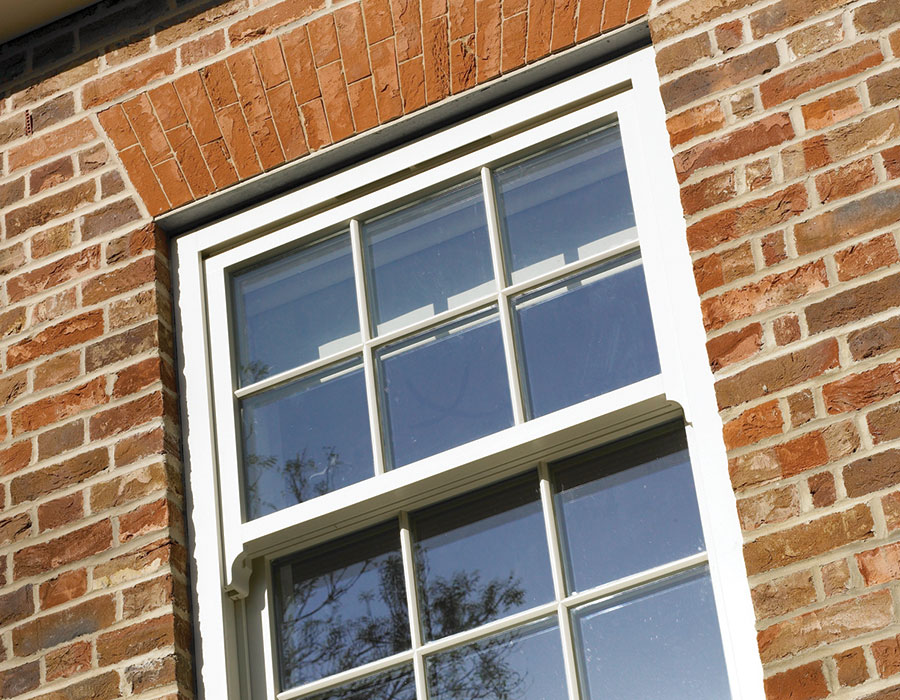
Softwood timber offers a brilliant balance of strength, cost and sustainability.
When engineered properly, softwood becomes incredibly stable and durable. That is why we choose it for our timber windows and doors.
Here is why it works so well:
- Sustainable – Softwood trees grow quickly and are easy to replant.
- Workable – Its physical properties make it easy to shape and finish.
- Affordable – It costs less than solid wood hardwood, without losing quality.
- Durable -With the right treatment, softwood lasts for a very long time.
How Bereco engineers softwood for lasting quality
The secret to a great timber window is what happens before and during manufacture.
At Bereco, we have our own dedicated sawmill. This gives us full control over quality from the forest to the finished frame.
Here is how we turn raw lumber into durable window sections:
Log sorting. Logs are sorted by heartwood content, size and diameter.
De-barking and sawing. Bark is removed and boards are cut to size.
Kiln drying. Five kilns dry the timber to a moisture content between 12% and 7% for stability.
Planing. The timber is planed to remove rough edges.
Removing defects. Knots and shakes are x-rayed and cut out to create defect-free sections.
Finger jointing. Sections are finger jointed, the most stable method of joining timber. The bond is stronger than solid wood itself.
Glueing and laminating. Sections are laminated in three layers, with the central grain running in the opposite direction for extra strength.
This process gives our windows an up to 60+ year lifespan, a 10-year warranty and low maintenance for life.
Bereco timber and sustainability
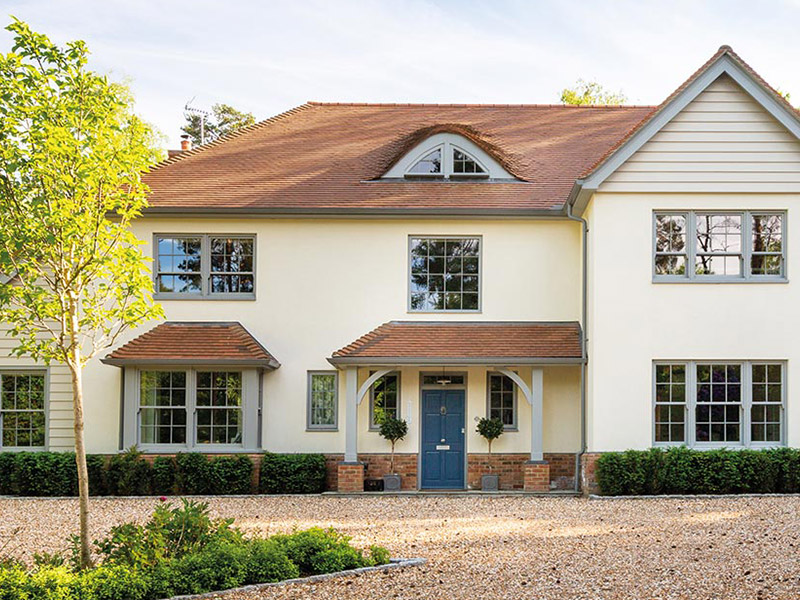
Timber is a fully renewable natural treasure, which makes it a perfect building material in the face of climate change.
At Bereco, sustainability is something we take very seriously. That is why all our timber is FSC® 100% or 100% PEFC Certified. Every piece of wood has full traceability back to a certified, sustainably managed forest.
Our range of timber windows and doors
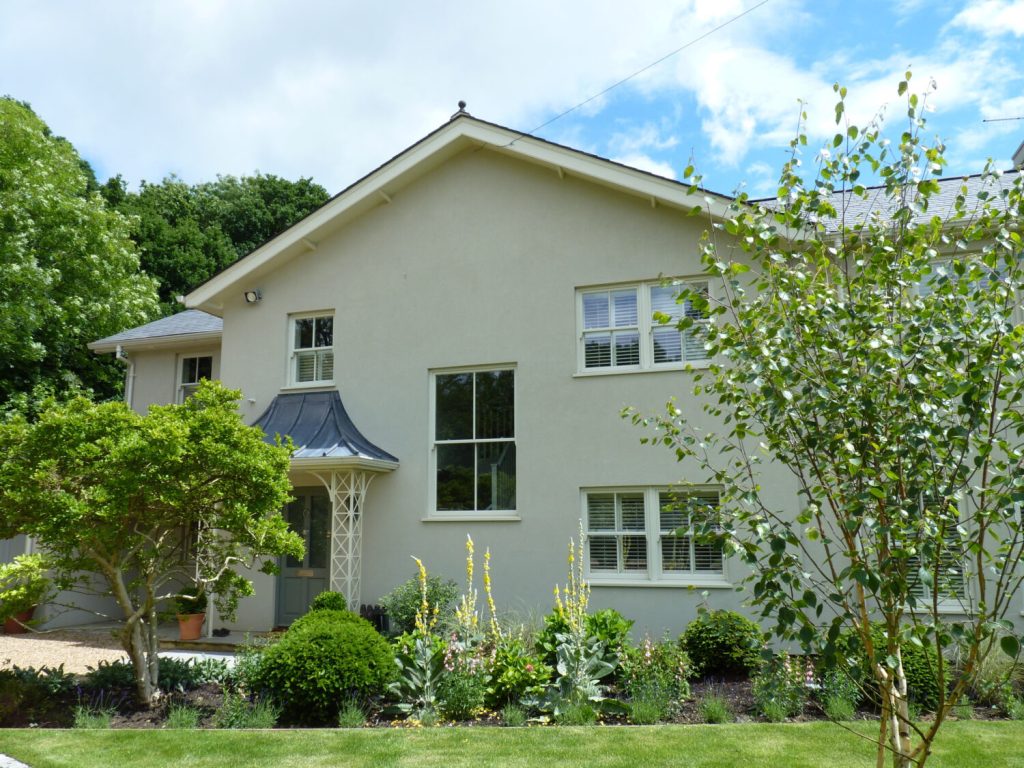
Every Bereco window is made to order. You can choose from:
You can customise bar designs, ironmongery, mouldings, and single or dual colour finishes.
Energy-efficient performance
Our double glazed timber windows and doors exceed the new Part L 2023 building regulations. They achieve U-values starting from 1.3 W/m²K, which is 7% better than the guidelines.
Our triple glazed windows and doors achieve U-values starting from 0.8 W/m²K, which is 43% better than the regulations.
Frequently asked questions
What is the difference between hardwood and softwood?
The primary difference between hardwood and softwood lies in their botanical origins. Hardwoods come from broadleaf trees, typically deciduous, while softwoods are sourced from coniferous trees, often evergreen. This distinction affects their density, durability, and uses in construction and furniture-making, with hardwoods generally being denser and more expensive.
Is softwood good for windows?
Yes. When engineered and treated correctly, softwood is stable, durable and long-lasting.
Is softwood cheaper than hardwood?
Generally, yes. Its fast growth rate makes it more affordable than hardwood.
What softwood does Bereco use?
We predominantly use European Redwood, also known as scots pine.
Start your project with Bereco today: contact our team
If you are looking for beautifully crafted, sustainable timber windows and doors, we would love to help.
Get a free quote or discuss your home improvement project today.
- Fill in our online contact form
- Call us on 01709 838188
- Email info@bereco.co.uk